Briana Gutierrez-Kemmerling — Revisiting and Reinvigorating: Examining NAGPRA’s Shortcomings and the Renewed Push for Repatriation
Introduction
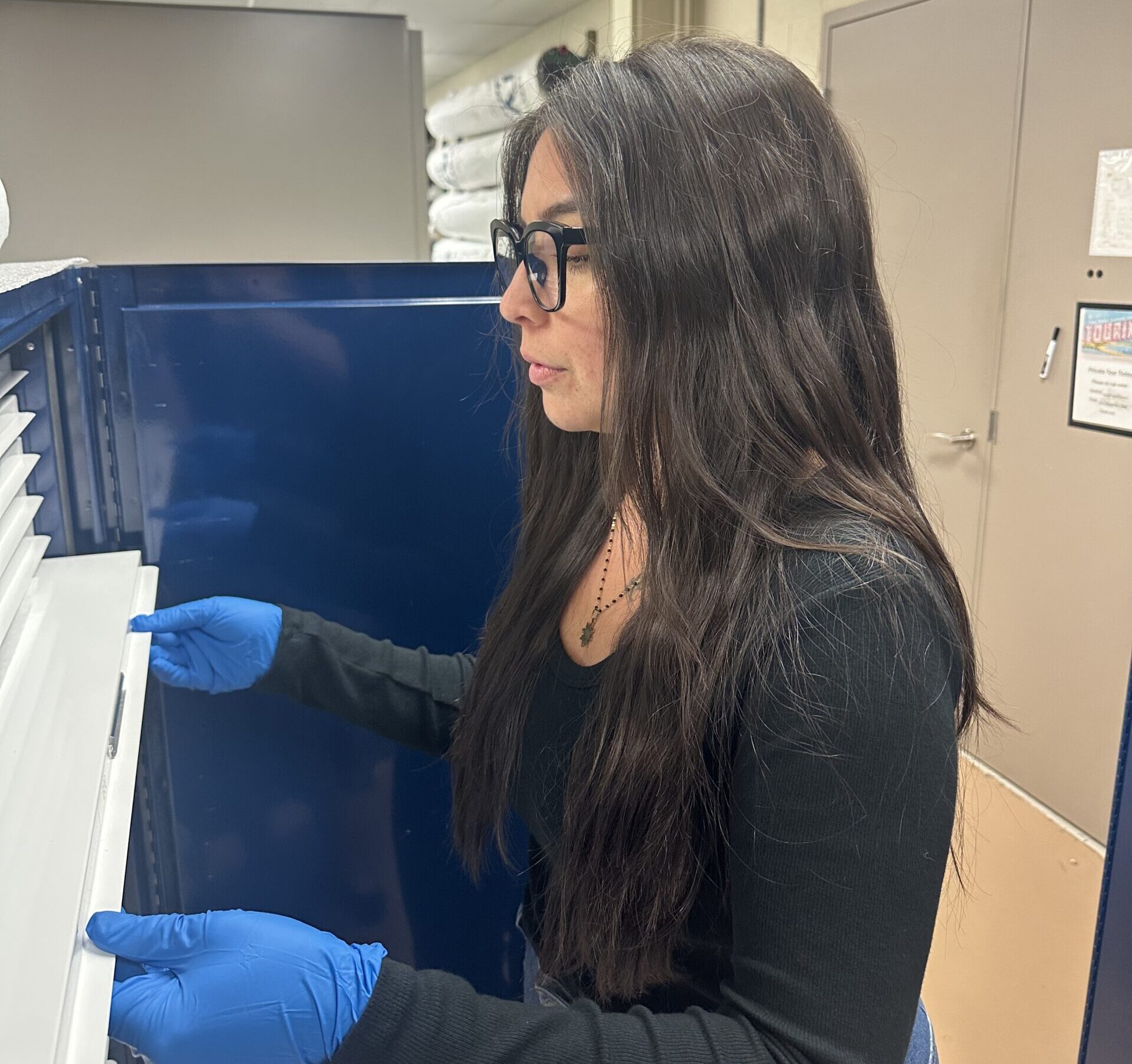
This research came together thanks to a mix of experiences earlier this year while I was finishing my graduate degree at the University of Michigan’s School of Information, focusing on digital archives, library science, and preservation. At the same time, I was completing a graduate certificate in museum studies and interning in the registrar’s office at the Henry Ford Museum of American Innovation, where I got the chance to work on projects connected to the Native American Graves Protection and Repatriation Act (NAGPRA).
As part of an independent study, I completed a research project that ended up feeling a lot like an unofficial thesis. I’ve always been especially interested in archival decolonization, repatriation, and NAGPRA and with guidance from my advising professor, David Wallace, and support from my supervisor, Laura Myles, Associate Registrar and NAGPRA Coordinator, I focused on these topics while working on my paper. Thinking through what I knew about NAGPRA at the time, my main question was: why the delay? I also wondered what problems could have contributed to these delays. What are institutions doing now to comply versus in the past? And how have the newly reformed NAGPRA regulations strengthened the push for not only compliance but also collaboration?
To answer these complex questions, I examined the issue through three approaches:
- A historical overview of the law focusing on the previous and newly revised 2024 regulations,
- An in-depth literature analysis of historical problems that have contributed to the delays of repatriation, and
- Using the Henry Ford as a case study.
During this case study I examined factors that contributed to past noncompliance and steps being taken to improve compliance, build relationships with Indigenous communities, and foster meaningful collaboration. Further discussed were the recent efforts to promote accountability, such as adopting procedures that are both legally compliant and culturally sensitive, developing more comprehensive and transparent inventories and the development of an ethnographic lexicon.
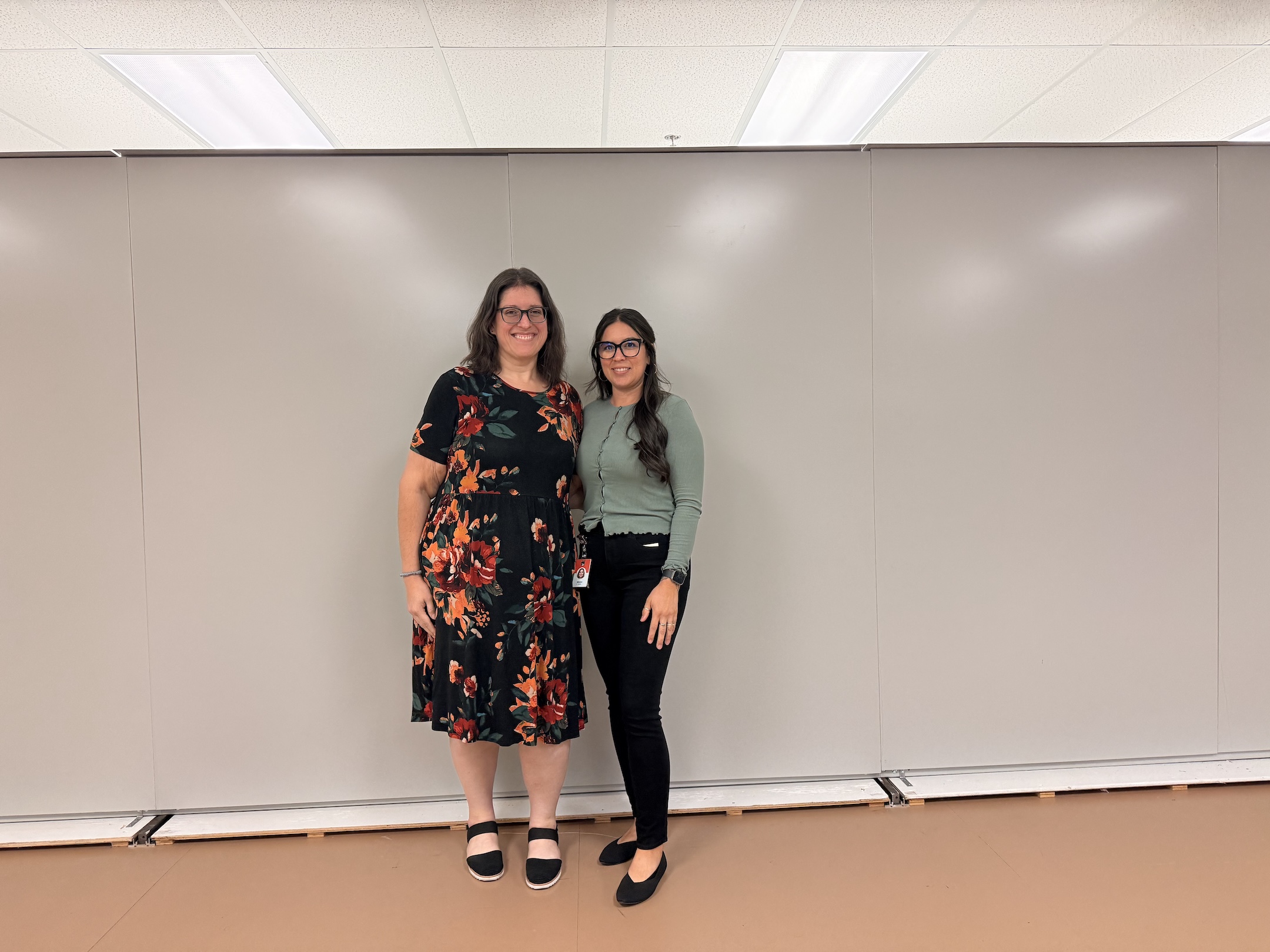
Laura Myles and Briana Gutierrez-Kemmerling
NAGPRA Overview
NAGPRA is a federal law enforced and implemented by the U.S. Department of the Interior, through the National Park Service (NPS). It was passed in 1990 and requires all museums and federal agencies that receive federal funding, excluding the Smithsonian Institution, to identify and return all ancestral Native American human remains, funerary objects, sacred objects, and objects of cultural patrimony to lineal descendants, Indian Tribes, and Native Hawaiian Organizations (NHO) [Please note that I will be following the legal language at times, but I support and respect the importance of sensitive and culturally appropriate language]. In doing so, NAGPRA not only established a legal process for repatriation but also exposed the troubling history behind these collections. Despite legislation enacted over 30 years ago to facilitate repatriation, many of the nation’s top museums and universities still hold thousands of Ancestors and cultural objects in their collections today.
Key findings from the literature analysis reveal that a significant factor contributing to non-compliance was the lack of clear definitions within the original legislation’s regulations: terms like “sacred object,” “cultural affiliation,” and “consultation” were left vague and undefined, creating loopholes that institutions have used to delay progress and compliance. Central to successful repatriation is the practice of meaningful consultation with tribal communities. However, such consultation has often been inconsistent and undermined by the absence of clear guidelines. Ambiguities in defining cultural and historical affiliations, along with inadequate consultation processes, have long hindered repatriation efforts. Additionally, both tribal nations and institutions face funding and resource deficits, which have further slowed the process and left many cases unresolved.
Further complicating these issues are institutional and ethical challenges. There are still museums and institutions operating under colonial-era mindsets that prioritize scientific inquiry over Indigenous cultural and ethical considerations. This mindset fosters a reluctance to part with collections, revealing a deep-seated tension between institutional property claims and Indigenous cultural values. Civil penalties have been weakly enforced, as institutions often receive more funding for NAGPRA related projects than the amount that has been collected from non-compliance fines. Moreover, systemic barriers, including limited funding for Indigenous communities and the lack of recognizing Native American traditional knowledge, have further impeded progress.
In response to these challenges, the newly revised regulations, implemented in January 2024, aim to mobilize change by addressing these issues. The updates require museums and federal agencies to identify and consult with culturally affiliated tribes and direct descendants as well as submit new inventories and summaries as part of the legal process. The updates also provide clearer guidelines and definitions for sacred objects, the care of cultural objects or duty of care, and consultation as well as requiring institutions to obtain free, prior, and informed consent of the relevant lineal descendants, tribes, or NHO before permitting any exhibition, access, or research involving human remains or cultural items. Moreover, Native American traditional knowledge is formally incorporated into decision-making, confirming that it is indeed expert opinion. The new regulation updates also shift the emphasis from requiring exhaustive evidence to allowing a “reasonable connection” as the basis for cultural affiliation, with a compliance deadline for inventories set for January 2026. According to the National Park Service’s NAGPRA Program’s 2024 fiscal year report, the number of human remains reported in NAGPRA inventories has increased by 6,445 individuals.
The Henry Ford: Historical Context
The Henry Ford is an indoor-outdoor museum complex located in Dearborn, Michigan and is a National Historic Landmark that showcases American ingenuity, resourcefulness, and innovation through interactive exhibits. Early collecting of the institution was founder-led by Henry Ford himself, often collecting objects based on personal interest rather than an established formal collecting plan.
In the very early years of the institution, Ford primarily depended on non-professional staff to run operations where he insisted that they follow his precise instructions without relying on known experts or the best practices of the time. Although there were several museum professionals on the staff who attempted to rectify the lack of organization by making multiple suggestions for professionalizing the institute, many recommendations remained unimplemented. Since Ford collected items based on personal interest without a formal collecting plan or record-keeping system, a large number of artifacts were acquired over the better part of the past century in an unstructured manner.
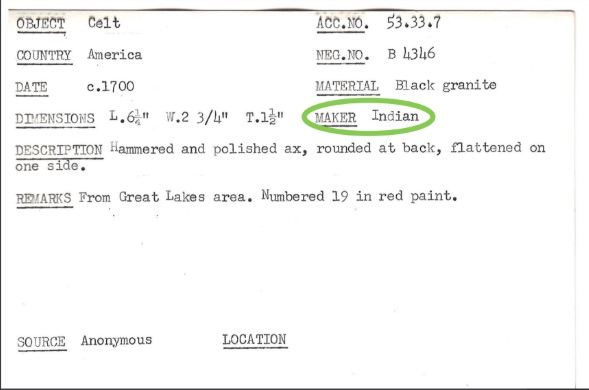
By the end of the 20th century, the status of many items was unclear, largely due to these longstanding documentation and record-keeping issues. Several scholars have noted that it wasn’t until the late 1970s to early 1980s that the institute created an increasingly professionalized administration and funding strategy comparable to other museums nationally. Next, during the 1980s and early 1990s the professional staff began the process of formalizing a collecting plan, with Indigenous objects having never been prioritized or included in the museum’s formal collecting plan. The staff also began the process of sorting through Ford’s improperly cataloged collection. Scholars have further noted that by hiring trained experts in related fields, the institute began improving its internal practices to align more closely with the standards and activities of museums across the country, making the institute what it is today.
Case Study and Recent NAGPRA Efforts
In 2019, during a routine inventory, funerary silver was discovered, prompting an immediate focus on accountability and repatriation. Since the Henry Ford did not have a designated NAGPRA employee at that current time, staff felt that they did not have the subject matter expertise to reach determinations on NAGPRA applicability and its legal requirements, nor did they have any established relationships with Native communities to consult with. Due to delays caused by the COVID-19 pandemic, it was not until February 2023 that staff concluded the need for assistance in evaluating certain cultural objects, and a preliminary review indicated that the museum may have been out of compliance with NAGPRA. Upon learning this, museum leadership immediately contacted legal council to conduct a complete review to determine its obligations under NAGPRA. “I think a lot of institutions went through the same thing,” says Laura Myles, NAGPRA Coordinator at the museum, “there was a huge push to do it the right way and fully commit.” In the fall of 2023, the Henry Ford submitted their summary to the NPS NAGPRA Program along with letters and emails to tribes thought to be affiliated with the current cultural items in the collection. In August 2024, the Henry Ford made its first official repatriation to the Stockbridge Munsee Community of Wisconsin. “We have people at the Henry Ford that are working in NAGPRA that understand that in the past, the institution has not been compliant with it [NAGPRA], and is working very hard to make sure that we are in compliance,” acknowledges Heather Bruegl, a citizen of the Oneida Nation of Wisconsin, public historian, and the curator of political and civic engagement at the Henry Ford, “we have great people doing the work.”
The case study explores an in-depth workflow illustrating how the institution navigated and implemented compliance processes. As an intern I primarily worked on preparing a NAGPRA summary for the cultural objects in the collection, which was difficult at times due to either scattered provenance records or lack thereof. Although these inconsistencies have posed significant obstacles, the NAGPRA team remains dedicated to ongoing consultation and collaboration with communities to ensure these items are returned to their rightful communities.
To support the effort of working within the spirit of the law, staff developed an ethnographic lexicon in collaboration with library, archive, and museum departments. Efforts have also been made to appropriately welcome and honor hosted guests. Strict protocols for access to NAGPRA collections have been implemented, and, as part of duty-of-care efforts, correspondence to tribes has been ongoing regarding culturally significant objects that require special care while awaiting consultation. Demonstrating their commitment to compliance and relationship-building with Indigenous communities, the institution has published a land acknowledgment on its website, along with comprehensive information about NAGPRA, tribal consultation, and the museum’s repatriation policy. Museum staff are also collaborating on other initiatives, such as expanding and deepening the institution’s land acknowledgment while working in tandem with tribal communities.
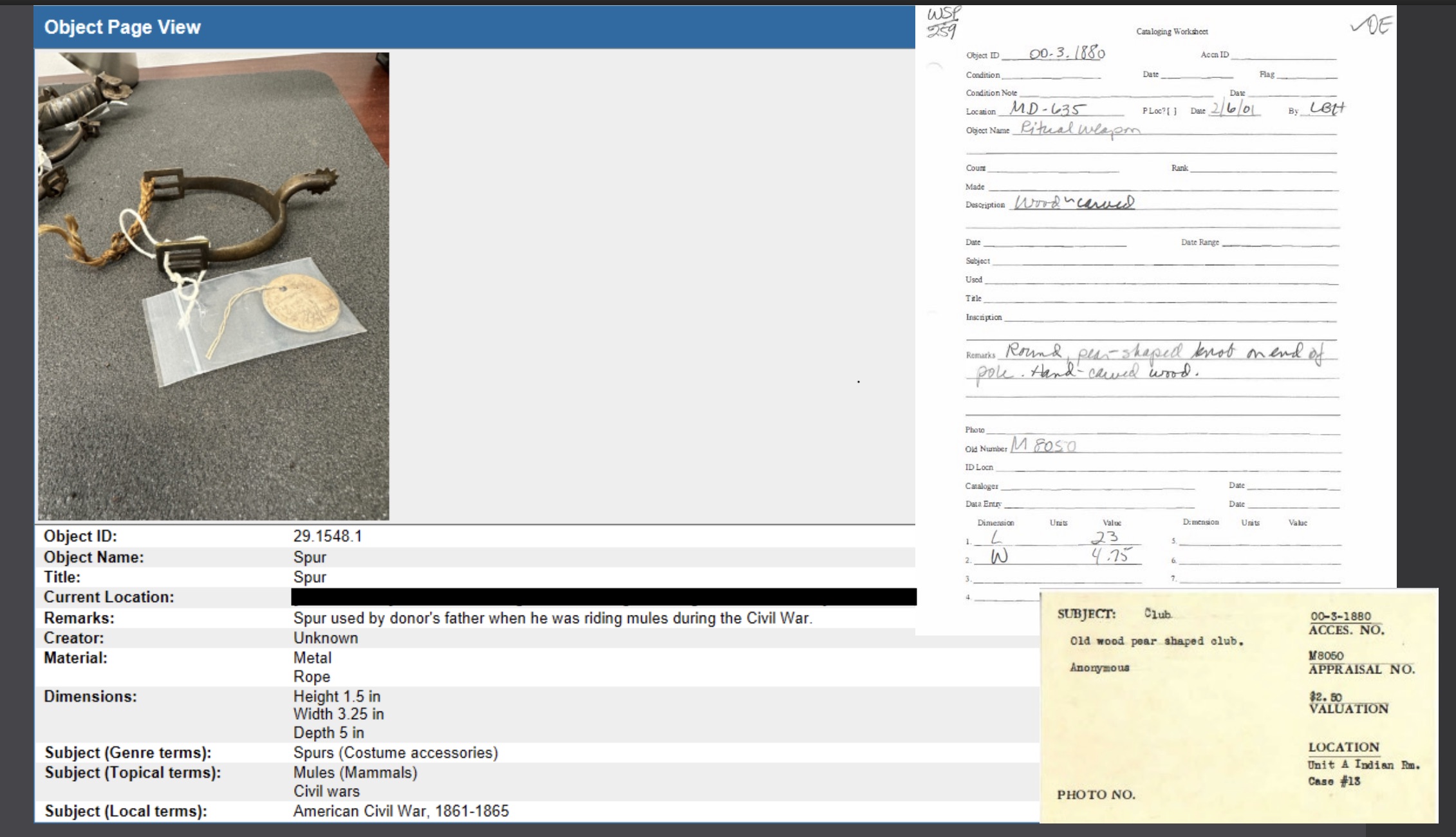
Evolution of cataloging: Top right shows an object cataloging worksheet from 2001 with location and “DE” indicating it was entered into the online catalog. Bottom lower right is the same object with an earlier subject catalog card and location. Bottom left shows the Object Page View of today’s online cataloging system.
What About the Archives and Intangible Heritage?
Archives and libraries serve as stewards of culturally sensitive materials, intangible heritage, and knowledge systems. However, these resources are often inaccessible to their source communities or managed without adequate consideration of Indigenous knowledge and practices. Although NAGPRA does not cover archival material, there are ways one can embrace responsible stewardship and/or ethical repatriation. The Society of American Archivists (SAA) formally adopted what is called the Protocols for Native American Archival Materials (PNAAM). These proposed standards are meant to inspire and to foster mutual respect and reciprocity. The main message throughout these protocols is to build relationships and collaborate with Indigenous communities, demonstrating the importance of consultation in all respective areas. Getting involved in SAA groups like the Native American Archives Section (NAAS) can serve as a source for communication, updates on news and future webinars, recent developments, and more. This year the SAA Council also endorsed the standard Principles in Indigenous Archival Repatriation (PINAR) set forth by the SAA Archival Repatriation Committee. These principles can assist archives and archivists in upholding the rights of Indigenous communities to their cultural and historical knowledge.
Conclusion
Although this has been an ongoing and evolving effort within the field over the years, the larger implications of the case study aimed to highlight a significant shift in the overall approach to NAGPRA compliance. Ultimately, the goal of my research was to support archives and cultural institutions in navigating and understanding the complex legal and ethical challenges historically associated with NAGPRA noncompliance. I aimed not only to provide guidance on achieving legal compliance with NAGPRA, but also to promote ethical responsiveness by emphasizing the importance of meaningful collaboration with descendant communities and the importance of record-keeping. Lastly, my research addresses the evolving issues raised by the recently strengthened NAGPRA regulations and highlights the need for institutions to engage thoughtfully and proactively in this critical work.
Links to Resources
- Code of Federal Regulations – NAGPRA
- National Park Service – NAGPRA
- Society of American Archivists – Protocols for Native American Archival Materials
- Society of American Archivists – Request for Council Approval of the Principles in Indigenous Archival Repatriation (PINAR)
Briana Gutierrez-Kemmerling
Briana Kemmerling is a recent graduate with a Master of Science in Information from the University of Michigan School of Information, specializing in Digital Archives, Library Science, and Preservation. She also holds a Graduate Certificate in Museum Studies and is currently the NAGPRA Assistant Cataloger at The Henry Ford. Her work focuses on ethical collections stewardship, repatriation and digital data sovereignty. Her graduate research explored archival decolonization, decolonizing research methods and institutional non-compliance with the Native American Graves Protection and Repatriation Act (NAGPRA). Her passion for preserving cultural heritage drives her commitment to responsible stewardship and collaborative repatriation efforts.