Erin Malone — Accessibility and Community Engagement in Paris Museums
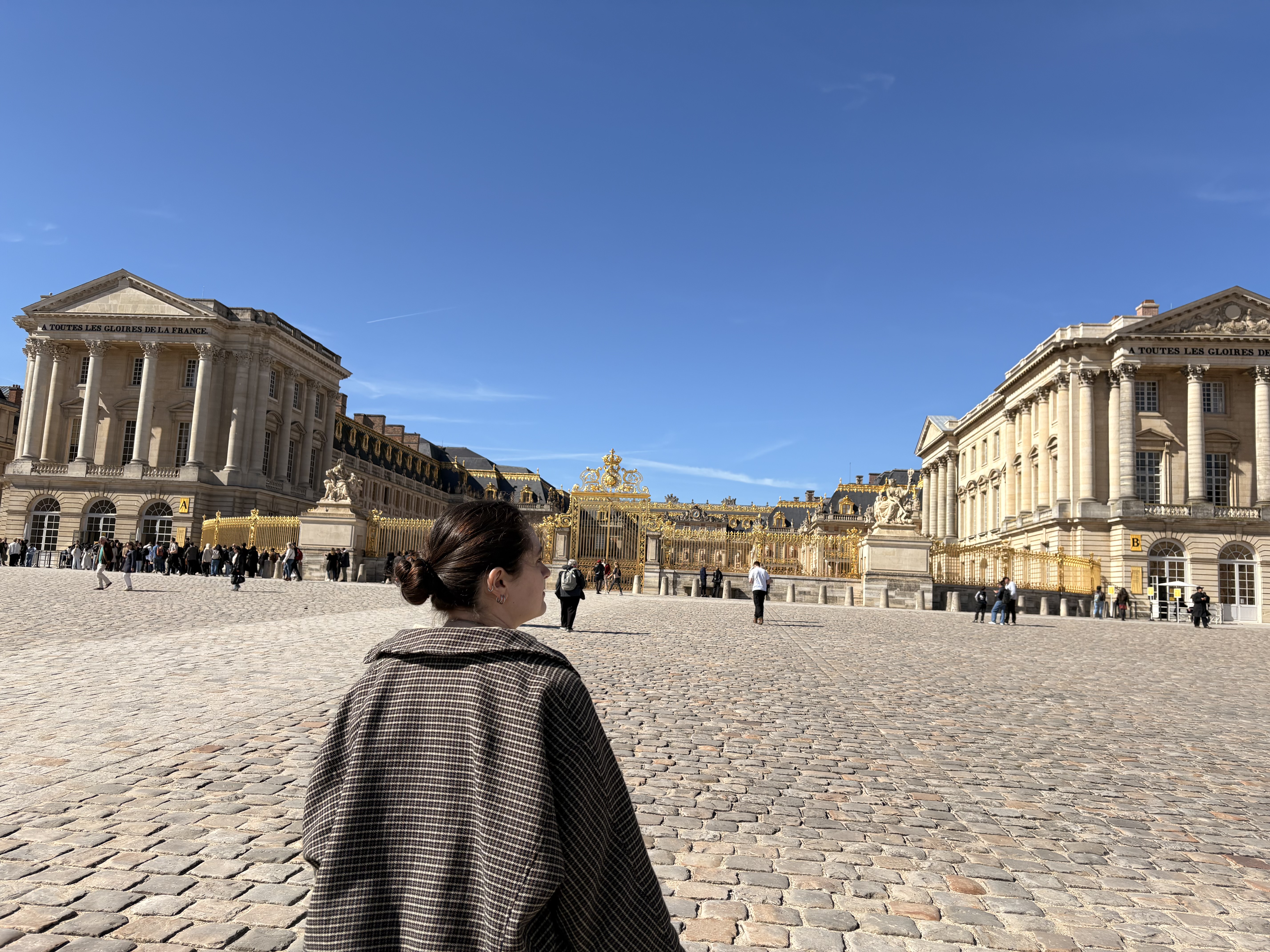
I recently had the opportunity to spend a semester in Paris, France. It was amazing being surrounded by such wonderful people, restaurants, public parks, markets, and especially the vast wealth of museums the city has to offer. In my time there I did many of the usual tourist things such as a climb up to the Sacré-Cœur, walk along the Seine, and navigate many winding streets around the Marais.
Walking around the city, some unexpected details began to naggle in my subconscious mind—a strong presence of walkers, uneven cobblestone, narrow walkways, and very few elevators in buildings, and especially metro stations that would be challenging to navigate for folks with physical disabilities. I realized the city was absolutely lacking in accessibility. On one hand, this made sense to me as it is a very old and densely populated city with architecture that was made before these things were major priorities, coupled with the natural intensity of the geography the city is built on—steep hills and deep rivers—which lend themselves to particularly challenging commutes. On the other hand, Paris is the most visited city in the world. The number of people living, working, and traveling throughout the city each day bolsters its economy and maintains its presence in the forefront of the modern world. It surprised me that solutions to making the city more accessible had not been found.
It sort of reminded me of visiting art museums with my family. When we go together, it is often because of me. I have an interest that they want to support and there’s something rewarding about going to an art museum, right? But in recent years, my father, who had severe arthritis, found it increasingly difficult to fully enjoy museums and needed to take frequent breaks. And I noticed other museum-goers seemed to be unsure about what they should be looking at. I wonder if there might be a way for them to better connect with the space for all the effort it takes to get us there.
I began to wonder if it was just me, who has travelled with physically challenged family members, who is just too focused on these kinds of things despite being able to navigate the city’s systems just fine myself. That was, until I walked into my first museum. Once inside the doors, it became clear to me that the challenges of the city have not been ignored, and where many of these museums were able, measures have been taken to include as many visitors as possible in the museum experience. I will share here some of the museums I visited, and what stood out to me in terms of the accessibility within each museum.
Palais de Tokyo
The Palais de Tokyo, a contemporary art center in Paris with a constantly rotating selection of temporary exhibits and visiting artists, is remarkable in their exhibition spaces and signage. The building offers lots of large, open space that is mostly flat with the exception of some small ramps and stairs which are often changed dramatically from one exhibition to the next. On their website is an interactive map for each floor that is open to guests, though it was a little confusing for me.
In my first few visits the space seemed so large and open, I was missing a bit of gallery seating, but in later visits some special seats entered the exhibitions that really caught my eye. They were often placed with a great view of the center of the room with comfortable seat cushions and even a backrest. On top of that there were headphones attached which provided audio descriptions of what could be seen from the chair as well as a tactile map of the space with the artwork in it. I saw many visitors trying out these chairs and listening to the descriptions with rapt attention. Maybe the descriptions were pointing out things they hadn’t yet noticed?
At the time, March-April 2026, there was a visiting artist named Joseph Grigely who had a focus on accessibility in art and had worked with the curators on some new ideas for the space. However, investigating the website led to more discovery. Here I learned that the Palais de Tokyo has been reassessing the accessibility in their spaces and training their staff to offer all sorts of guided tours and services for visitors.
The Palais de Tokyo also offers distinctive educator resources. Teachers have access to free downloadable booklets that cover various curriculum topics through an art lens. In addition to this educators can contact the museum in advance of a visit and receive a guided tour from curators or visiting artists, as well as advice on a crafted tour that covers topics students are learning about in class. Museum staff put in a lot of work to make personalized educational experiences accessible to visitor groups at the Palais de Tokyo.
Grand Palais
The Grand Palais, “grand” being the leading word, is host to some pretty great exhibitions and events. They have programming geared towards a large variety of audiences and in the winter they have made their indoor space into an ice rink. Conventions are held here, as well as other performances and activities. Needless to say, a lot happens here all the time. While I only visited the Grand Palais once, I could tell that it had made itself very accessible and engaging for its community. Most notably, the exhibition that I saw incorporated accessibility into its exhibition design and curation.
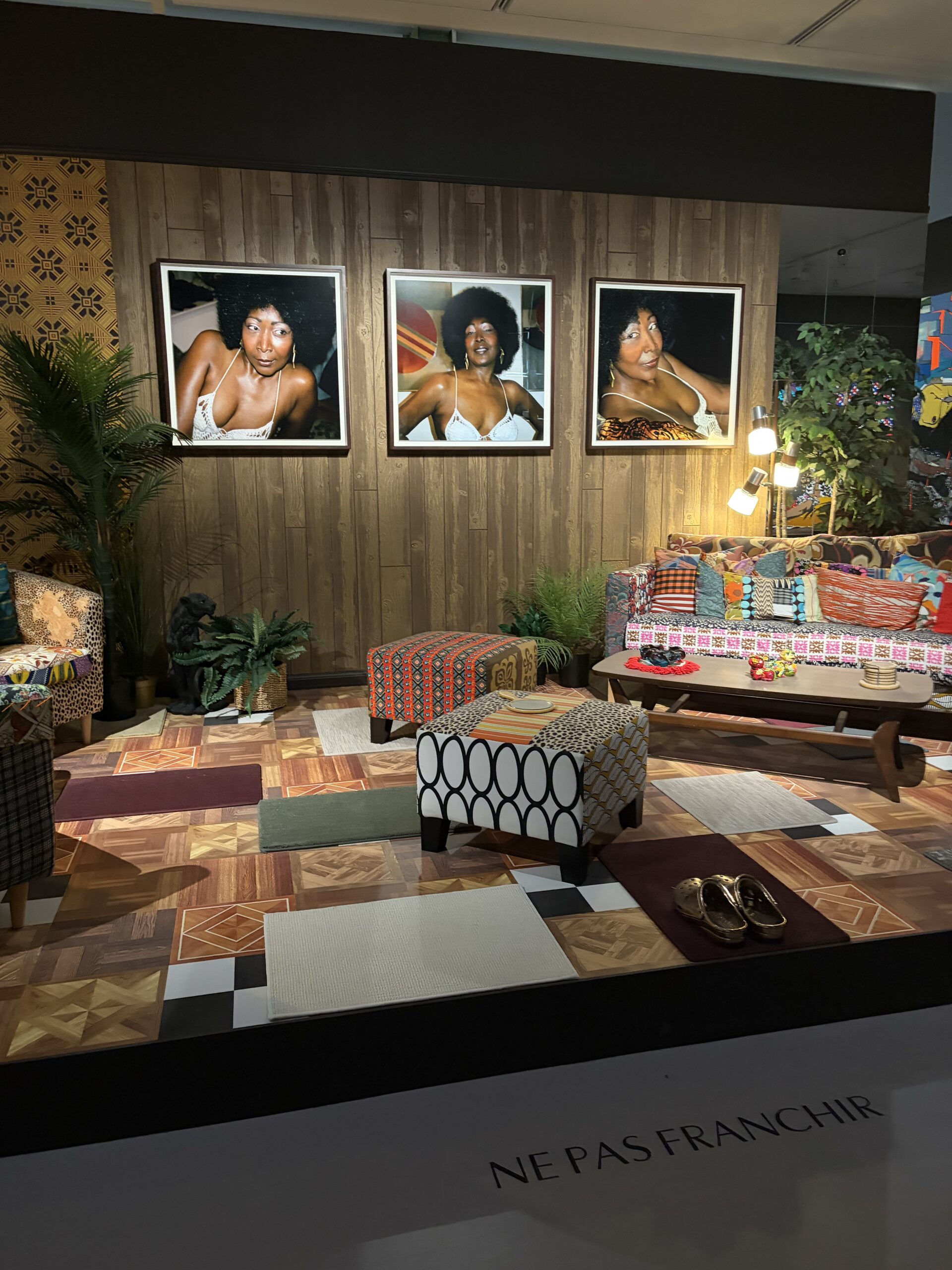
I went to the Grand Palais to see the Mickalene Thomas: All about Love show. The exhibition was very interesting in terms of content —most notably, the ways in which seating was incorporated into the show. Unlike other museums, which often just offered stools that visitors could borrow, the Mickalene Thomas show actually incorporated seats into the room itself. I am not sure who was more responsible for this design feature—Thomas or the curators—but there was hardly a space within the exhibition that did not have a seat. Even more, the seating was so involved with the exhibition design that it felt like another way to engage with the art. For example, the first room featured a chair in front of a television set playing a video piece of Thomas’. Later, another video piece included a set of couches surrounded by literature by African-American writers. These books helped visitors understand some of Thomas’ influences. Another room featured shag carpet, wood-paneled walls, and beanbag chairs, all styled like a basement. This room felt like teleporting into a memory. Rather than walking through the exhibition, it felt like I was in it. In terms of accessibility, I preferred having seats at the ready rather than searching for a place to rest.
Musée Carnavalet
The Musée Carnavalet, the Paris history museum, was the shining star of museum accessibility. Within this museum’s exhibits, website, and staff are a myriad of access routes to your museum experience.
I went to this museum not sure how much I would be interested in local history, but I ended up finding a massive collection of items dating back thousands of years, paired with maps, audio, video, diagrams, and interactives that kept me thoroughly engaged throughout the various eras of Paris’ inhabitants. The museum was organized in a fairly straightforward manner, each floor focusing on a time period with certain wings finding more specific niches. Within each there were information walls with not only French descriptions but English, Spanish, and simplified French paired with Braille. For each image was a tactile reproduction as well which included small items such as buttons and medallions. Some interactives were even made at various heights and with numerous access points so multiple people could use them simultaneously and collaboratively.
The Musée Carnavalet has a beautiful website. It is a great tool for using the museums accessibility to its fullest, but also very easy to navigate. The website includes visitor data logs available in the “Plan Your Visit” section. It presents each day of the week in a bar chart with individual hours of operation. Each bar shows what the average visitor density is at that time. This is super helpful in planning a visit and preparing for what that is going to look like—especially for those who are averse to overcrowding or planning on bringing a large group. Additionally, they offer lots of suggestions on routes and exhibitions to help visitors plan their visit around their needs and interests.
Musée Carnavalet also has a free mobile app which aids in the planning of a visit. Here you can find suggested tours for various interests and visitor groups as well as means of planning your own tour through finding objects of interest and collection items related to them. The app also can provide descriptions and navigation tools in a larger variety of languages than the signage within the museum provides, so it is a great resource for travelers.
Musée des Egouts
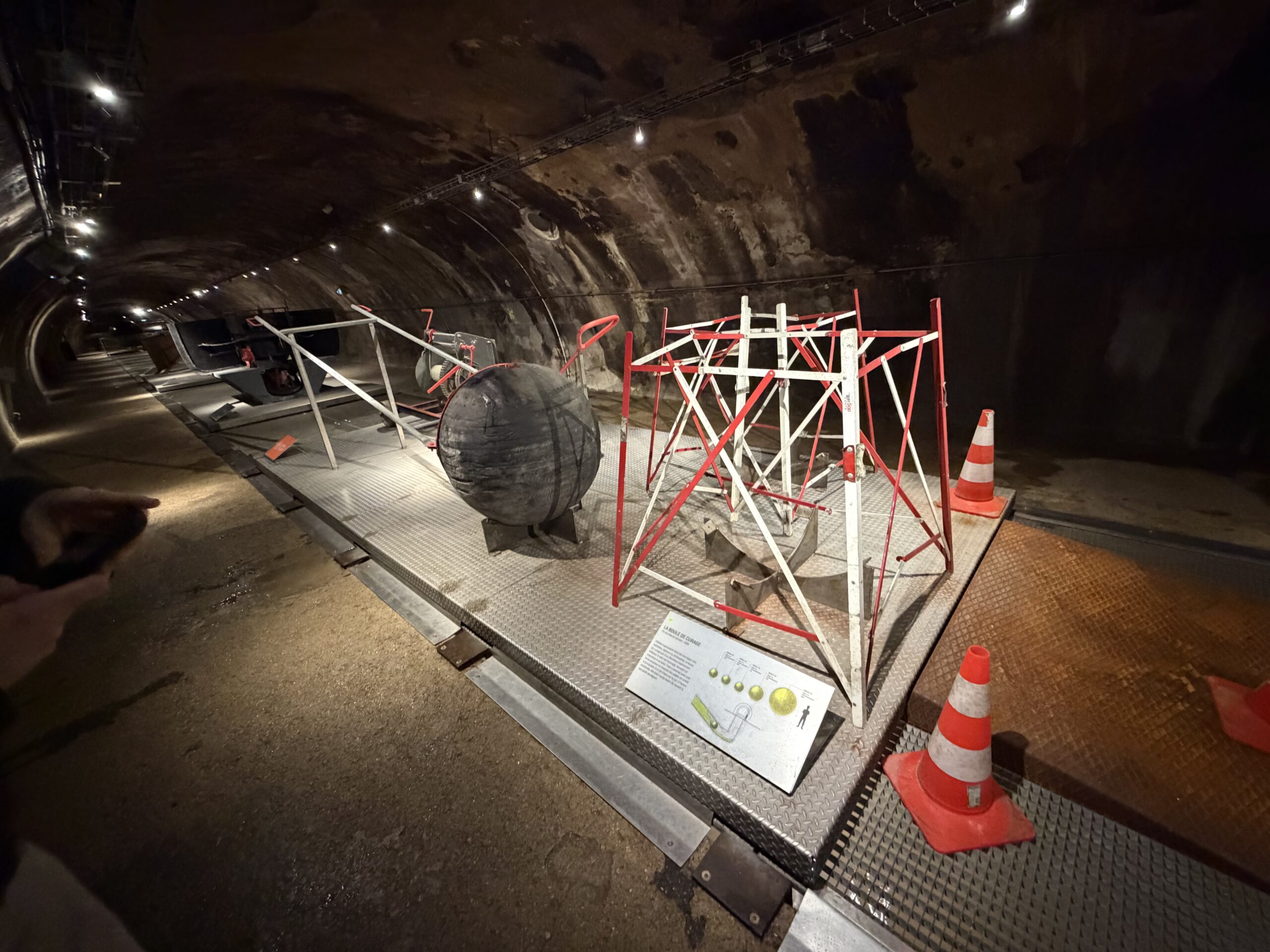
For the sake of space, I am going to mention only one more museum here, and that is the Musée des Egouts—the Paris Sewer Museum! This was a very quirky and interesting museum that caught me by surprise. It offers a very thorough perspective on the history of Paris’ sewer systems and the engineering, labor, and energy that goes into supporting the plumbing needs of a city as old and dense as Paris. With exhibitions held deep underground within the real pipes of Paris, it is a complete sensory experience featuring, smells, drips, slips, dark passageways, and real, living rats.
This museum has particular physical challenges in terms of access. This museum is not for the claustrophobic, sensory-sensitive, pregnant women, or children under five—all of whom are likely to be prone to incidents within the museum space. On its website, the museum clearly advises against visiting if the conditions of the space would bring anxiety or harm to someone such as those who struggle being in dark, damp spaces. Temperature and poor lighting are cited here, as well as a warning about claustrophobic spaces, grime, and strong sounds and smells (I can confirm there is due cause for the smell warning). It is suggested here to wear proper attire—closed-toed shoes—as well as long sleeves and pants due to various environmental factors. They also mention here a risk of slippery ground as there is running water just beneath the grates that visitors walk on. Here, they also ask visitors to obey direction signs, not cross chain barriers, touch anything, or consume any food within the museum. They also recommend washing hands when leaving. The website also discusses accommodations for visitors who are visually impaired or use wheelchairs. Throughout, the museum acknowledges the dangers of their space that make accessibility a challenge.
Reflections
Now, I have said my piece about my awesome museum experiences during my stay in Paris, but what do these experiences mean going forward? Here is what I learned:
- The main contributing factor to these museums’ accessibility is their ongoing dialogue with the community. Whether it be through consulting advocacy groups for adaptive installations or being honest about hazardous conditions, each of these museums engages the public.
- Having front-of-house staff that can confidently answer questions or are capable of providing alternate tours can greatly shape a visitor’s experience.
- Tactile reproductions can be relatively simple to make and have incredible impact in terms of visibility and engagement. While this can be expensive or difficult to build in, especially for certain kinds of museums, it could make a big impact for more than just the intended audience.
- For labels, simple adjustments can go a long way. Simplified language options can help engage foreign-language speakers, younger audiences, those who struggle with reading, and even the average museum-goer.
All in all, I found the museums in Paris to be incredible resources for anyone in the city, whether they be a resident or a tourist. Almost all of them were easy to find, had easily navigable interiors, helpful staff, and material that went well beyond objects on a shelf, whether that be easily bookable guided tours, take-home materials, downloadable maps, and custom guides to facilitate the best visit possible.